
AI With No Strategy Is Spaghetti on the Wall
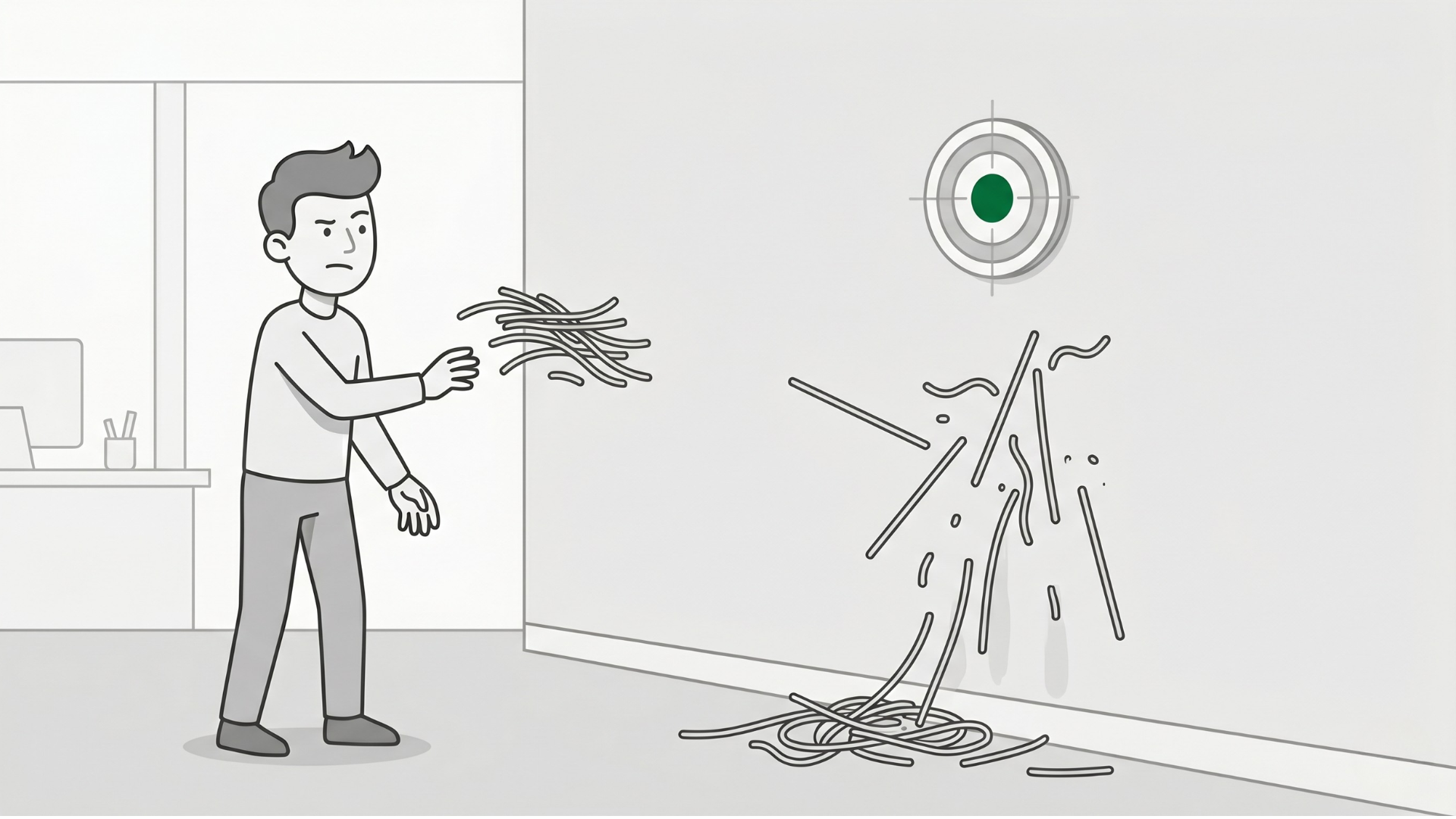
The biggest message about AI at the 2026 NC Tech Summit for Women wasn't about tools. It was this: AI needs a clear strategy and a real problem to solve, and empathy is what makes the change stick. I went in braced for a day of AI hype. Instead, I heard executive after executive say both of those things out loud.
Here's what stuck with me from the AI and the Future of Work panel, Carol Houle, and Kristi Straw:
AI needs a strategy and a problem to solve
That message came through loudest on the AI and the Future of Work panel. One panelist described Accenture's shift from "AI in the loop" to "AI in the lead," but the conversation kept returning to the basics: start with the problem you're trying to solve, build real context into the tools, and plan for the people side of change, because that's where adoption succeeds or stalls. Skip those steps, and you're just throwing AI at the wall to see what sticks. Their shorthand for doing it right: build with empathy.
This is where my UX brain lit up. Start with the problem, not the solution, is the first rule of good design work, and it was energizing to hear it applied to AI strategy by the people setting it.
Carol Houle put it plainly: technology doesn't transform organizations; leaders do. AI doesn't fix what's broken; it amplifies it. Her advice was to invest in the foundation before chasing the shiny thing, and to never let technology stand in for human connection.
The question I wrote down twice: what are we letting go of to make room for this new thing? On every team I've led, we were great at adding and terrible at subtracting. New tool, same meetings, more load.
Make the decision visible
Kristi Straw's session on the trust gap is the one I keep thinking about. Her point: the trust gap determines whether people actually move on a decision. Closing it takes what she calls authority architecture, four things leaders need to make visible:
The decision. What's being decided? Name the choice, the owner, and the next decision point.
The judgment. What requires a human call? Name the tradeoffs, the standards, and who's accountable.
The human impact. Who absorbs the consequence? Translate the decision into what people will experience and what they'll need.
The evidence. What will make the change credible? Show the proof, and say how you'll know what changed.
She framed this around AI, but it applies to every reorg and every "new direction" email. When people don't know who decided or why, they fill the silence with the worst case. And asking "who absorbs the consequence?" before you roll something out is empathy built into the plan, not bolted on afterward.
What Really Stuck With Me
Looking back at my notes, two threads ran through every AI conversation.
First, AI is a tool, not a strategy. The leaders getting it right start with a real problem and a clear plan, and they're honest about what they'll stop doing to make room for it.
I used to tell my team, “AI can’t replace you. That’s like hiring a hammer. It’s just a tool; someone still needs to use it.”
Second, empathy isn't the soft side of leadership. It's how change actually sticks: naming who's affected, making decisions visible, and never letting technology stand in for human connection.
Hearing that from executives, not just from designers, change practitioners, and coaches, felt like a real shift.
That's the work I care most about, whether I'm leading a team, steering an organization through a big change, or helping a leader figure out their next move: turning ambiguity into something clear enough to act on, and keeping the humans at the center while we do it. If any of these questions hit a nerve for you or your team, I'd love to hear which one.